
AAPT 2026 Summer Meeting July 19–22, 2026
Pasadena, California
Statistics
Attendees:
Exhibitors:
Workshops:
Commercial Workshops:
Abstracts:
Posters:
Program Committee Chair: Andrew Gavrin
AAPT California Section
Rich culture, beautiful spaces, and a welcoming atmosphere made Pasadena a standout choice for the AAPT 2026 Summer Meeting. The city is home to The California Institute of Technology (Caltech) and the Jet Propulsion Laboratory (managed for NASA by Caltech). As of 2022, Caltech's 46 Nobel Laureates have brought 47 Nobel Prizes home to Pasadena.
The Meeting was held at the Pasadena Convention Center. Located in the heart of the city, the Convention Center is within walking distance of restaurants, shops, and local attractions. With convenient access to the greater Los Angeles area, the venue offered an ideal setting for professional learning, collaboration, and connection.
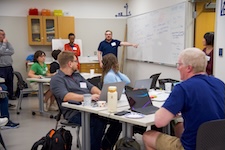
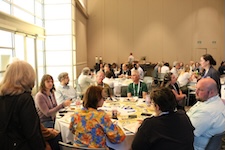
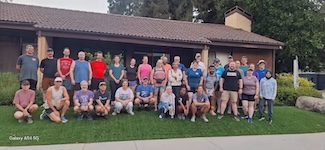
Much anticipated features of the Summer Meeting, The AAPT Fun Run/Walk, The High School Physics Photo Contest, Demo Show, Career Speed Networking, PhysTEC 25th Anniversary, PTRA Bootcamp, and the First Timers and Early Career Meetup, are always highlights and this year was no exception.
Plenaries
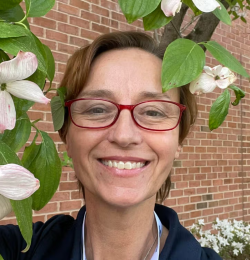 Deborah Armstrong, PhysTEC Teacher of the Year
“Hands-on Physics with Low Cost Materials”
Deborah Armstrong has been a science educator for over 17 years, dedicated to inspiring students through Physics, Chemistry, Engineering, Robotics, and other STEM disciplines. Her career began in Fort Worth, Texas, and has taken her through diverse teaching roles, culminating in her current position at Mineola High School, where she also serves as department head and technology support specialist. Known for her innovative teaching, Armstrong ensures that hands-on laboratory activities dominate the classroom experience, helping students connect theoretical concepts to real-world applications.
Armstrong’s excellence has been recognized through numerous awards, including the Tandy Texas Teacher of the Year, NSTA Vernier Teacher of the Year, STAT Science Teacher of the Year, CAST Innovative Teacher of the Year, VFW Teacher of the Year, and Fulbright Global Teacher. She has also secured grants to support hands-on programs, developed a mobile STEM trailer, and coordinated annual science shows that bring engaging demonstrations to younger audiences.
As a leader in professional development, Armstrong has presented at the National Science Teachers Association Conference, the Texas STEM Conference, and the Texas State Science Conference. Her workshops—such as “Junkyard Engineering,” “Dollar Store Science,” and “Quick and Easy Physics Projects”—provide educators with practical and creative tools to make science engaging and accessible. She also contributed to advancing STEM education through research as a Penn State Research Fellow, co-authoring presentations on robotics and human-robot collaboration.
Her written contributions extend to serving as a reviewer for National Geographic’s upcoming Physics Lab Manual and authoring Physical Science Labs & Projects You Can Do Today!, a resource for educators and students seeking hands-on science learning.
Armstrong holds a Bachelor of Science from Oklahoma State University and an MBA with a minor in Information Systems from the University of Colorado. Beyond teaching, she mentors new educators, openly shares her teaching materials, and continues to shape science education at the local, state, and national levels.
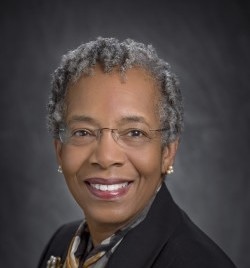 Saundra Yancy McGuire
Saundra Yancy McGuire’s efforts to help students develop effective learning strategies began over 50 years ago when she was a first-year graduate student in the Department of Chemistry at Cornell University. She is now an internationally recognized chemical educator, author and lecturer who has travelled the globe promoting strategies to help students to be successful in their coursework and careers. She has presented workshops or keynote addresses to audiences in 48 states, 14 countries, and 6 continents.
McGuire is currently Professor Emerita of Chemistry and Director Emerita of the Center for Academic Success at Louisiana State University. Prior to joining LSU, she spent eleven years at Cornell University, where she received the coveted Clark Distinguished Teaching Award.
She is the author of the best-selling books Teach Students How to Learn and Teach Yourself How to Learn. McGuire’s most recent accolades include receiving the 2025 American Chemical Society Stanley C. Israel Regional Award for Advancing Diversity in the Chemical Sciences, receiving the 2024 Tyrone Mitchell Mentor on the Map Award from the National Organization for the Professional Advancement of Black Chemists and Chemical Engineers (NOBCChE), being listed in 2023 as one of the Top 100 Learning Influencers in history by Eduflow, being named a 2022 Louisiana Legend by Louisiana Public Broadcasting, and induction in 2017 into the LSU College of Science Hall of Distinction.
She is an elected Fellow of the American Chemical Society, the American Association for the Advancement of Science, and the Council of Learning Assistance and Developmental Education Associations. She received the Presidential Award for Excellence in Science, Mathematics, and Engineering Mentoring in a White House Oval Office Ceremony.
McGuire received her B.S. degree, magna cum laude, from Southern University in Baton Rouge, LA, her master’s degree from Cornell University, and her Ph.D. from the University of Tennessee at Knoxville, where she received the Chancellors Citation for Extraordinary Professional Promise and is a 2025 inductee into the University of Tennessee College of Education’s Educators Hall of Honor.
Anjali Tripathi
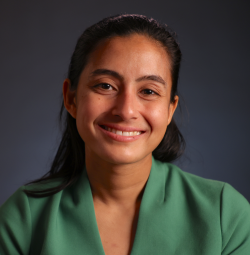 Dr. Anjali Tripathi is an astrophysicist at the intersection of science and policy. Her research has focused on how planets form within protoplanetary disks and evolve through atmospheric escape, and she has contributed to the development of new astrophysics mission concepts. As NASA’s Exoplanet Science Ambassador, she leads science communication and strategic engagement for NASA’s Exoplanet Exploration Program. She is also active in research and initiatives for sea level change and climate adaptation. She previously served in the White House Office of Science and Technology Policy and the US Department of Agriculture, during the Obama and Trump administrations. Committed to using science to serve society, she has been a science communicator for PBS and the National Academy of Sciences, a Research Associate of the Smithsonian Institution, and co-lead for the Los Angeles County Department of Public Health’s COVID data and epidemiology team.
Education:
• PhD & MA, Astronomy and Astrophysics, Harvard University
• MPhil, Astronomy, University of Cambridge
• SB, Physics & Minor in Applied International Studies, MIT
Awards
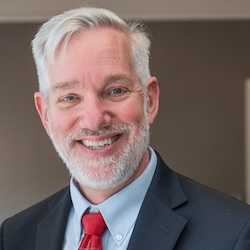
Aaron Titus, Halliday and Resnick Award
 Teaching Physics in an AI World
Titus is recognized for his visionary leadership in building and strengthening undergraduate physics programs, his transformative teaching in large-enrollment courses, his dedicated mentorship of both students and faculty, and his influential contributions to physics education through WebAssign, the Open Source Physics project, and Matter & Interactions.
Titus is Teaching Professor and is a co-coordinator of Physics for Engineers and Scientists at North Carolina State University, Raleigh, North Carolina. He has been an active member of AAPT since 1995 and, besides the committees required as part of his Board of Directors role, he has served on the Lotze Scholarship, Physics in Undergraduate Education, Graduate Education in Physics, and Educational Technologies committees. He was elected and served as the Four-Year College Representative for AAPT from 2013-2016. In 2019 he was recognized for his service with the Homer L. Dodge Citation for Distinguished Service to AAPT.
In addition, he has been active in the North Carolina Section, serving as an officer, presenting talks (several receiving awards) and workshops as well as hosting several Section Meetings. He taught at High Point University from 2002–2022. When he first arrived at High Point University, there was no physics department and no physics major. Titus was instrumental in creating a physics degree program as part of the Department of Chemistry. He was equally instrumental in the creation of a separate Department of Physics, and he served as its first Chair.
His research has been in development and research of multimedia-focused problems, where students are required to take data from an animation to solve a given problem. As a graduate student Titus co-developed WebAssign with Larry Martin. He is a co-author of the fifth edition of Matter & Interactions with Ruth Chabay, Bruce Sherwood, and Steve Spicklemire, and he is as an advocate for incorporating computation and research into the undergraduate physics curriculum starting in the first year.
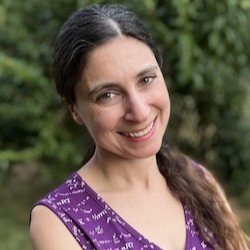
Danielle Bugge, Paul Zitzewitz Excellence in K-12 Physics Teaching Award
 "The Joy of Not Knowing – Yet”
Buggé is recognized for her “outstanding work in K-12 teaching, for the special connection she manages to forge with her students, for her strong encouragement of others, and for her ability to help her students to develop resilience.”
Buggé's leadership in the field of physics education is exceptional and undeniable. She was trained in the Rutgers Physics Teacher Preparation Program and in 2020 earned her Doctor of Philosophy in Physics Education Research, also from Rutgers University. Since this time, she has continued to honor her commitment to high school students, while also instructing preservice teachers in their graduate education courses. Her active engagement in the scientific community, through leading sessions and community groups at the national American Association of Physics Teachers meetings, further solidifies her position as a leader in the field. Her continued publication of valuable papers on physics education research, co-leadership in facilitating monthly professional development meetings for the Rutgers University physics teacher alumni community, and collaboratively developing and leading annual ISLE workshops for high school teachers around the country are a testament to her commitment and leadership in the field, providing confidence and assurance to those she works with.
Stefanie Walch-Gassner, the 2026 recipient of the Klopsteg Memorial Lecture Award.
 Walch-Gassner is a world-renowned leader in the study of the interstellar medium (ISM) and star formation. Her research utilizes massive, three-dimensional supercomputer simulations to reveal how stars are born from cosmic gas and how their subsequent energy—in the form of radiation, winds, and supernova explosions—shapes the evolution of entire galaxies.
She is being honored for her significant efforts engaging a broad audience in contemporary astrophysics, including through The Shared Universe Engine (SUE), a new cloud-based portal that aims to connect users, at very different levels, to the “Machinery of Discovery,” which AAPT celebrates as a cutting-edge approach to science outreach. Walch-Gassner is the designated spokesperson for “Our Dynamic Universe,” a new Cluster of Excellence in Germany and, as the President of the German Astronomical Society (Astronomische Gesellschaft, AG), she has been a leading voice in our global scientific community.
Walch-Gassner is a distinguished German astrophysicist and a leading figure in theoretical astrophysics. Her academic journey began in Germany, where she studied physics at the University of Regensburg and at Ludwig-Maximilians-Universität (LMU) Munich. She earned her Ph.D. in astrophysics from LMU Munich, after which she pursued postdoctoral research positions internationally. She worked as a postdoctoral researcher at Cardiff University in Wales and later at the Max Planck Institute for Astrophysics (MPA) in Garching, Germany. These formative research experiences helped her develop expertise in computational astrophysics and the physics of the interstellar medium.
In 2013, Walch-Gassner was appointed as a full professor of theoretical astrophysics at the University of Cologne. In this role, she has been leading a research group and teaching astrophysics, while continuing to conduct cutting-edge research. Her scientific work focuses on the interstellar medium (ISM) – the gas and dust between stars – and its role in the life cycle of galaxies. She investigates how processes in the ISM, such as turbulence, star formation, and supernova feedback, drive the evolution of galaxies across cosmic time. Walch-Gassner is especially known for using advanced numerical simulations to model these complex astrophysical processes. This expertise in simulations and theory of the ISM is key to understanding how galaxies form and evolve within the cosmic web over billions of years.
Beyond her individual research, Walch-Gassner has taken on major leadership roles in collaborative scientific projects. She currently serves as the spokesperson (principal investigator) of Collaborative Research Centre 1601 (CRC 1601), a multi-institution research program funded by the German Research Foundation. CRC 1601, titled “The Cosmic Evolution of the Habitats of Massive Stars,” studies how massive stars form and impact their environments across different scales – from local star-forming regions to entire galaxies over cosmic history. Under Walch-Gassner’s leadership, this project connects researchers in Cologne, Bonn, and other partner institutions to unravel the “habitats” of massive stars, linking processes from subparsec scales (within stellar nurseries) up to megaparsec scales (the scale of galaxy clusters). Her roles as designated spokesperson for “Our Dynamic Universe,” a new Cluster of Excellence in Germany and as CRC spokesperson highlight her ability to coordinate large teams and drive complex research agendas.
Read more (https://www.aapt.org/aboutaapt/Walch-Gassner-to-Receive-2026-Klopsteg-Memorial-Lecture-Award.cfm)
Sea Change Bronze Award
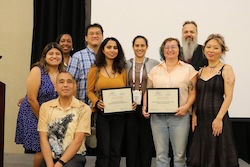 PA/SEA Change empowers participants to identify and address barriers that will enhance student and faculty retention, and foster resilience aligned with each institution's unique mission and goals. Participants join a supportive community of peers where they complete a self-assessment and create bespoke action plans rooted in data and the realities and opportunities of context. The Physics and Astronomy focuses on postsecondary physics and astronomy contexts. P/A SEA Change is a collaboration of professional physics and astronomy societies: American Association of Physics Teachers (AAPT), American Astronomical Society (AAS), American Institute of Physics (AIP), American Association of Physicists in Medicine (AAPM), American Physical Society (APS), AVS (Science and Technology of Materials, Interfaces, and Processing), National Society of Black Physicists (NSBP), National Society of Hispanic Physicists (NSHP), the Physics and Astronomy Division of the Council on Undergraduate Research, Optica, and the Society of Physics Students (SPS).The SM 2026 Award goes to California State University, San Bernardino and the University of San Diego.
AAPT Fellow Award: David Sturm
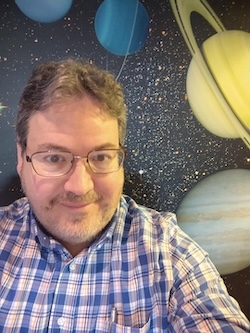 AAPT Fellows are distinguished physicists, educators, administrators, and communicators who have been recognized for their contributions to the physics education community.
David Sturm is the instructional laboratory and lecture demonstration specialist for the University of Maine Department of Physics and Astronomy. A member of AAPT and PIRA since the 1990’s, David has a history of distinguished service to AAPT locally and nationally. David's service shows a long-term commitment to the Apparatus community, including past and current time as chair. He has been an active leader and officer for PIRA. He has served in various roles in the New England Section In his role as Section Representative for New England he served in a variety of leadership positions between 2012 and 2023. He has also served in the communities on Laboratories, and Science Education for the Public, and on the Meetings Location, and PTRA Oversight Committees. From 2017-2021 Sturm served on the AAPT Board of Directors during the pandemic, which was a time when many crucial decisions were made. Since leaving the Board, he stepped into the Nominations Chair role, at a time when declining membership and smaller conference attendance has raised challenges regarding how our committees are filled. He has reached out to members, drawing them into roles that develop their leadership and bringing them solidly into AAPT.
Homer L. Dodge Citation for Distinguished Service to AAPT
Marc “Zeke” Kossover
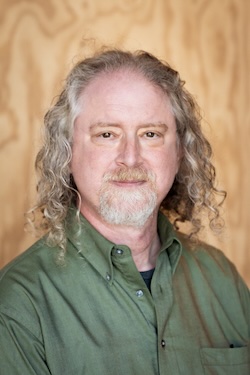 Kossover is recognized with the Homer L. Dodge citation for his contributions to the Northern California/ Nevada Section of AAPT, CSTA (now CASE), and the Exploratorium. He embodies the camaraderie and the belief that AAPT is founded on, that physics teaching is made better through collaboration. He offers ideas, lessons and support to all science teachers he meets freely and openly. He has been a classroom teacher, administrator, mentor teacher, science advisor for television, Albert Einstein Distinguished Educator Fellow, Stanford Visiting Scholar, and past co-director of the Exploratorium Leadership Program. He represents the best of us with his innovation, collaborative spirit and generosity of time and expertise.
Kossover is a teacher and past Co-Leader of the Leadership Program at the Exploratorium in San Francisco, California. A member of AAPT since 1997, Kossover has been a leader in physics education for 20 years. Through his involvement in AAPT, the Exploratorium’s Teacher Institute, and Einstein Fellowship he has been able to directly and positively impact physics teachers. He continues to offer ideas, lessons and support to all science teachers he meets freely and openly. Kossover embodies the camaraderie and belief that physics teaching is better through the collaboration that AAPT is founded on.
He continues to innovate new demonstrations and hands-on learning Experiences for teachers. His ideas are simple, clear and effective for teaching physics, and he shares them wildly wherever he can. Kossover collaborates with anyone who asks, helping to meet the needs of their students at whatever level. The activities he designs are out of materials easy to procure, often recycling things from other uses and his designs keep in mind the budget constraints of most schools.
As a member of the Northern California/ Nevada Section of AAPT, he has been a fixture for years. At every meeting they have a section called “Share & Tell” in which members can sign up on the spot to share anything they want for five minutes. Participants often bring materials from their classroom to show something new they have built, a unique way that they have done a lab or something new they just found and are excited to try. Kossover always had something so fascinating to share. Often he has a group of members around him at break, asking for more details on whatever he has built. He is excited to share with anyone who asks for more details, offering advice based on their circumstances on how to adopt it.
As a lead facilitator of the Exploratorium Teacher Institute, he presents on behalf of the program at national conferences, including AAPT. Each time he presents, the attendees are fully engaged in hands-on experiences. Kossover brings giant suitcases of equipment to his workshops and tries to leave with them empty. Following the Exploratorium’s belief that people should touch and explore science, and the understanding that teaching requires “stuff”, all of his workshops include giveaways of what you need to teach what he’s showing you.
Kossover has also been a keynote speaker at section meetings twice. He is a stimulating speaker, showing his deep knowledge of the subject and making it fun for the audience. You can tell he was the same way as a teacher, making sure that his students enjoyed their learning without trying to “trick” them into it.
The belief that all students deserve quality physics education, with a capable teacher and hands on learning experiences is fundamental to both AAPT and Kossover. He has devoted his career to quality physics teaching and sharing his knowledge with others.
Krista Wood
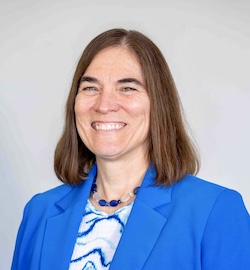 Krista Wood is recognized with the Homer L. Dodge Citation for her sustained service, mentorship, and vision to the AAPT community. Dr. Wood has provided exemplary leadership at both the regional and national levels of AAPT. As president of the Southern Ohio Section, she revitalized governance, strengthened community bonds, and welcomed new members with generosity and care. Nationally, she served with distinction as Member-at-Large for Two-Year Colleges on the AAPT Board of Directors, as a mentor for new and mid-career faculty, and as a leader in OPTYCs and the New Faculty Development Series."
Wood is Professor of Physics, University of Cincinnati Blue Ash College, Cincinnati, OH. She graduated with her B. S. in Electrical Engineering from Kettering University. Her M. Ed. in Secondary Education is from Xavier University, and her Ph. D. in Physics Education is from the University of Cincinnati. Wood has been both a thoroughly capable administrator and an insightful leader of the Southern Ohio Section of AAPT. She has focused on strengthening the physics teaching network in our region. In her most recent term on their board, she led a thorough rethinking of their board structure and constitution, brought new members into the community and into the leadership, and instituted new practices for strengthening the bonds within the community. Krista accomplished this work effectively, and in doing so has created for the board an enduring new pattern of keeping on track and in communication. She stands out for her subtle but transformative work in her roles on our board.
A member of AAPT since 1995 Wood has served on numerous committees, including the Committee on Physics at Two-Year Colleges. She was elected to the National AAPT Board of Directors, serving from 2021-2024, as the Member-At-Large Representing Two-Year Colleges (TYCs). Being a member of the National Board of Directors required a tremendous commitment of time and energy. She wrote quarterly reports to the Board on the activities and concerns of TYCs. She solicited information from the community via multiple platforms, including monitoring the TYC Physics Slack Channel and the TYC Physics Google Group, and also getting feedback from the Committee for Teaching Physics at Two Year Colleges and OPTYCs.
Wood has been serving as a mentor to other faculty for many years. She has been an eAlliance Peer Mentor for mid-career physics faculty from two-year colleges across the U.S. since 2018. She also helped the eAlliance leadership in recruiting TYC women in physics and astronomy and used the eAlliance model to initiate a peer group of faculty at the University of Cincinnati who were applying for promotion.
Wood was also an alumna mentor to the 2016 cohort of the AAPT Two-Year College New Faculty Experience (NFE), co-facilitating and mentoring new physics faculty. In 2017, she hosted the NFE Commencement Conference for the American Association of Physics Teachers (AAPT) from July 21–23 at the University of Cincinnati Blue Ash College.
While simultaneously engaged in this service, Wood has also been engaged in OPTYCs since its inception. In 2021 she chaired a working group to research and compile ideas for the successful NSF grant, and she is now a part of the OPTYCs leadership team. As the coordinator for both the New Faculty Development Series and the Leadership Institute, she plans activities, schedules program logistics, recruits participants, and disseminates results to the community. She also provides mentorship to new faculty participants and alumni leaders in these programs.
We thank PASCO for sponsoring the badge holders, Vernier for their support of the 5K Fun Run Walk and Physics Photo Contest, the AAPT California Section for a warm welcome.
Find out more and become a part of SM2026 on: Facebook | Twitter
 |